
Exit Strategies | Overview of 5 Exit Strategies for Small Business
What exactly IS an exit strategy? Small business owners have their hands full building and maintaining a business, but rarely spend time in advance thinking about how they’ll eventually hand off the company they’ve built. Understanding your options to transition out of the business can help you develop long-term goals and an exit strategy that nets you the largest possible return on your time and financial investment in your business. Check out these five exit strategy types to start thinking ahead!
Read the full article at: www.patriotsoftware.com

Crafting Products and Services to Reduce Time-to-First-Dollar
We’ve all seen our share of tire-kickers – those would-be buyers who take their time in making a purchase decision, evaluating every detail because they’re in no rush to pull the trigger. This problem becomes especially prominent when your company’s main service or product is a comprehensive, all-inclusive solution since there’s that much more to evaluate.
Good marketers know all this time sitting in the sales pipeline hurts revenue growth, and that’s why it is important to get prospects to buy something as quickly as possible. Sales Renewal has worked with clients in different industries to minimize this so called “Time to First Dollar” by various means ( such as “unbundling” a comprehensive service to create smaller, easier-to-buy services). Learn more about reevaluating your offerings through Sales Renewal’s “Crafting Products and Services to Reduce Time-to-First-Dollar” webinar. You can also read more about specific case studies and our proven track record for putting this and other revenue accelerating marketing strategies into effective action.

Six Ways Going “Green” Can Boost Your Bottom Line
We’ve heard it over and over again: it’s important for the environment to work “green” or eco-friendly initiatives into our lives whenever we can. For individuals, the path to a greener lifestyle is simpler, but for businesses, an eco-conscious approach may seem difficult to integrate at first. We think there are plenty of green initiatives your small business can adopt – and they’ll also be great for your bottom, and sometimes top, lines.
1. Grow your business by marketing your eco-friendly products, services and expertise
In every industry, there’s a largely untapped segment of buyers that values and is willing to pay for green products, services and expertise. Metro Sign & Awning (a Sales Renewal JointSourcing client), for example, wanted to cultivate new Partners who’d recommend their signage products and services in the Partners’ new construction projects. With our help, Metro created a series of white papers that helped Architects and Property Developers become more knowledgeable about green signage. The idea was that by making these prospective partners more knowledgeable about something Metro was expert at (eco-friendly signage), the partners would come off as more knowledgeable in front of their customers. This brought more business back to Metro as well, creating a clever – and successful – marketing campaign that not only built their own business, but also enhanced their partnerships while doing double duty for sustainability.
2. Share the knowledge.
Do your products and services have a long-term environmental impact? Let your customers know how working with you can impact THEIR green initiatives and bottom line! Outline both the financial and ecological ROI on a sustainable product. Generate content that discusses how your eco-friendly products can reduce your customers’ carbon footprint or eliminate their waste over time. By leveraging your own environmental consciousness into a marketing campaign, you’ll encourage your customers to invest in your products and services, while also doing double duty for sustainability! You can also grow your partners’ businesses by sharing your own green expertise, helping your partners win more customers through the wisdom you’ve passed to them.
3. Think outside the (recycling) box.
Green initiatives at your company aren’t limited to benefitting ONLY your company. Get creative with your business’ approach to environmental friendly decision making. Understand your carbon footprint and consider participating in carbon offset programs to supplement and enhance any company policies you have already implemented. Use your business voice to align with policy initiatives that align with your company’s values. Customers in the modern era are heavily attracted to purpose-driven businesses that publicly share – and take action on – their values. You’ll not only be doing the earth a favor, but you’ll be gaining favor with and growing your customer base!
4. Assess your energy needs.
Are you leaving equipment or lighting on overnight? Are you heating a conference room you only use once per week? Minimizing wasted energy sources will not only help the environment, but will also put a nice dent into your energy bills. Switch to LED lighting in place of incandescent bulbs, and put your lights on motion sensors to ensure lights are turned off when not in use. Set computers and other office equipment to hibernate or switch into sleep mode during periods of inactivity. Consider switching to laptops, which are more energy-efficient than desktops, whenever possible. You may also be eligible for rebates on your energy costs if you’re upgrading to eco-friendly equipment, so contact your energy supplier to see what incentives they may offer!
5. Assess your physical office needs.
Your business’ office footprint is your own piece of the environment, and needs as much care and consideration as the great outdoors. Find an office that is the right size for your needs to prevent wasted energy from heating and lighting spaces that are unused. When upgrading equipment or furnishing your office or workspaces, shop secondhand when possible (something Covid has made a lot easier with all the office downsizing going on now). Look for energy efficient machinery, or for sustainably built furniture that will outlast other construction. Or, consider eliminating your rent bill completely by allowing your employees to work remotely! Remote offices reduce pollution from commuting to and from the office, and reduce your employees’ gas and wear & tear expenses, so it’s a win all around!
6. Assess your paper needs.
Printing and paper use is a prime target for small businesses to make an impact with a few simple changes. Printing on both sides of each sheet will cut both your paper waste and your paper cost in half instantly. Or, use the back side of printed papers as scratch paper for note taking instead of purchasing sticky notes or other notepads. Or, consider going paperless completely! With the proliferation of cloud computing, records storage and document sharing can be done without a single sheet of paper; marketing can be managed online through email campaigns, social media, and websites; even sales and accounting can be migrated to online payment programs and bookkeeping software. Never buy another ream, nor another clunky printer or copier, again!
Sales Renewal’s Strategic Consulting Service Helps Law Firm Pivot with New Business Model
Sales Renewal is often asked to help clients wrestling with challenging strategic decisions, whether it’s adjusting their business and marketing strategies to their new Covid realities (something that has unfortunately become way too common), reducing their time-to-first-dollar from prospects in their pipeline or devising a go-to-market strategy for a new product or service they’re considering.
This video, for example, discusses Sales Renewal’s work with Eno Martin Donahue & Roth LLP, a 130-year-old law firm with offices in MA and NH, that needed a go-to-market strategy for a new service idea that had three ambitious goals:
- Changing the way small and midsize businesses think of, and engage with, their attorneys.
- Growing the firm’s outside general counsel business (lawyers who perform the strategic & legal functions in-house attorneys do in bigger enterprises); a recurring revenue stream highly coveted in the transaction-heavy legal business.
- Structuring the new service so that the attorneys did not have to “sell” it (which they loathe doing).
Many small business owners are not aware of the benefits that having a closer relationship with a business attorney can provide and the uncertainty around cost—and fear of a running meter—prevents most from ever reaching out.
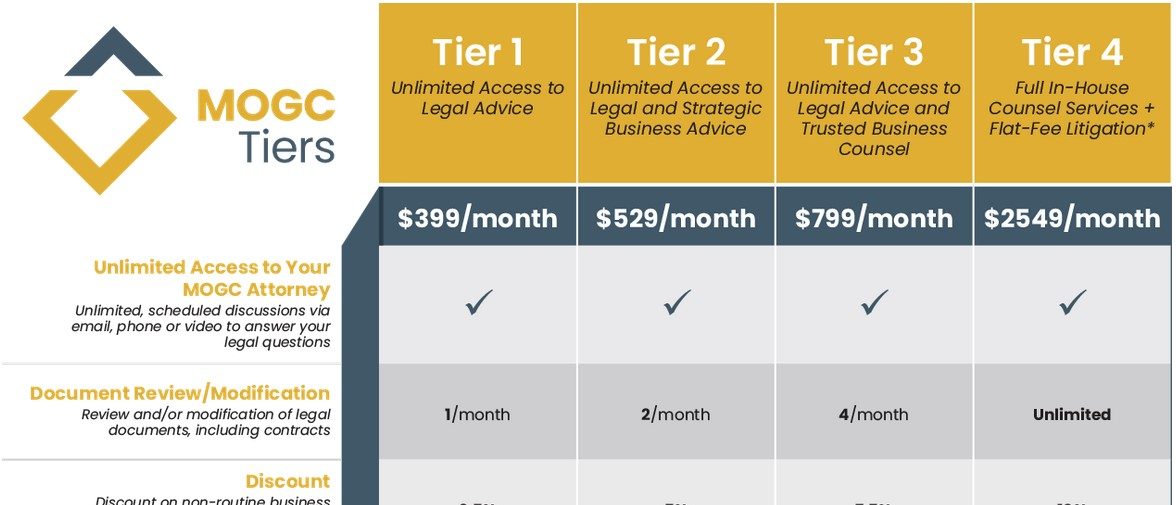
Working closely with the partners at Eno Martin, Sales Renewal helped flesh out and shape their vision for a new subscription-based legal service for small and midsize businesses. The result, My Outside General Counsel (MOGC), is designed to make it easy & affordable for business owners to benefit from ongoing legal & business counsel, a strategic capability formerly limited to large enterprises.
With Sales Renewal’s help, MOGC was developed into a formal program with a variety of clearly defined benefits and costs, transparently laid out at MyOutsideGeneralCounsel.com. Four different tiers of service, each with increasing monthly benefits, allow business owners to choose a tier based on their legal needs and budget.
Unlike other legal services websites, MyOutsideGeneralCounsel.com is completely transparent about the program, how it works, what is included at each level and most importantly, its fees. By combining an abundance of information on the site and explaining how MOGC leverages the common and well-understood “freemium” web business model, prospects readily understand this new service, thereby shortening their time in the pipeline.
Since lawyers are, by nature, reluctant salespeople, the logical progression the model presents to simply slide to a different tier when it becomes clear that more work is needed, means clients don’t need a hard sell to recognize when they need to move up.
Listen to Keith Loris, President and CEO of Sales Renewal, talk with David Yas of Podcast617 to learn more about how Sales Renewal worked with our client to successfully develop MOGC, from concept through launch.

Webinar: Crafting Products and Services to Reduce Time-to-First-Dollar
The Problem: Prospects Sit In Your Pipeline Too Long
Many service providers often have a single, all-inclusive service that’s presented as a binary choice: hire us for the whole service or don’t hire us. Because these services are typically important and consequential (e.g., wealth managers help save for retirement, lawyers defend against lawsuits, architects design bridges, …) prospects are typically in no rush to make a decision. They like kicking the tires to be sure you are the right guy or gal and your firm is the best choice for such an important decision.
The end result is prospects sit in your pipeline too long.
This is our recent webinar for USA 500 Clubs, a community for successful Trusted Advisers in which we share and elaborate on this post’s insights.
Targeting & Reaching Your Fastest Prospects
Of course, one of the primary goals of marketing is to move prospects through the sales pipeline as quickly as possible and a tried and true marketing strategy that does this is to define, target and reach your fastest prospects: those who most need you, when they most need you (aka, “lowest hanging fruit”).
Importantly, this focus on fastest prospects accelerates and improves the performance of all lead generation marketing tactics: advertising, email marketing, content marketing, networking, all of them perform better when targeting prospects at the precise moment they have the most critical need for your service.
For example, one of the fastest types of prospects for a wealth manager is middle class, middle-aged people who have just received an inheritance: they probably don’t have a current wealth manager, know much about investing and are highly motivated to put their new money to work for their retirement.
Employing Content Marketing and SEO tactics, you could (1) write a blog post titled “What to Do and Not Do with an Inheritance” (a subject that these prospects would probably be very interested in) and (2) work to have it rank well in search engines so that it’s easily findable and widely available.
Reevaluate Your Offerings
A more fundamental approach to reducing the time-to-first-dollar would be to take a fresh look at your services from a Product Marketing perspective (product marketers are responsible for designing, creating and managing profitable products and services):
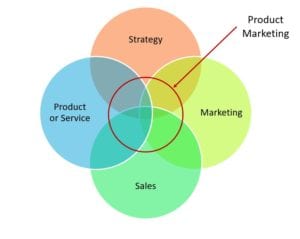
Here are two proven product marketing strategies that minimize time-to-first-dollar for service businesses (and that product businesses use all the time):
New services for your fastest prospects: do your fastest prospects need different services than the ones you have now? If you developed new ones specifically for them, would they buy even faster, pay more, be more loyal, etc.?
Unbundle your all-inclusive service to make it easier to become your customer: can you unbundle your service to create simpler, more focused services so there’s less of a barrier to doing business with you? These new entry point services should be less expensive and consequential and should ideally provide a natural upgrade path to the rest of your services.
For example, the first thing a wealth manager typically does with a new client is to create a financial plan. What if instead of insisting they sign on for all your wealth management services in order to get a financial plan, you spun out a new standalone, financial planning service?
There will be more prospects for this new entry point service and they will move much faster through your pipeline because: financial planning can be marketed using traditional lead generation techniques like advertising and is a lot less risky than investment management (the most you can lose with a bad financial plan is its fee, unlike bad investments which can ruin lives).
Importantly, financial planning creates many opportunities for a wealth manager to show off their skills, intelligence and trustworthiness and creates a natural upgrade path. If they’ve been suitably impressed with the development of their financial plan, they will turn to you to implement the plan.
Takeaways
- Focus on targeting & reaching your “fastest” prospects: those who most need you when they most need you.
- Develop new services for your “fastest” prospects
- Unbundle your all-inclusive service to create tiered services with upgrade paths. The entry-point service should be less risky and require less commitment & dollars
Sales Renewal Can Help
Sales Renewal is working with all of our clients on refining their business and marketing strategies for the Covid era. Whether it’s shortening the “time-to-first-dollar”, implementing minimal contact sales and marketing programs, creating alternatives to traditional face-to-face marketing, or revamping communications to earn trust, contact us to learn what we can do for you.

How COVID-19 Could Impact Retail Design: Clean lines, Clean Spaces
History has already shown us quite how drastic an effect disease can have on spatial design. COVID-19 will undoubtedly impact how we create space.
Source: www.frameweb.com
The COVID-19 pandemic will likely be an inflection point in the design of public and retail spaces. Expect to see changes in materials used (plastic and steel are out – copper is in) and navigation paths (more IKEA single-path navigation, less Apple Store open concept). In addition, advanced HVAC filtration systems and spacial semiotics to denote entrance to a clean, controlled environment will be needed to instill consumer confidence and encourage customers to return to brick-and-mortar retailers.

Thought Leadership Marketing for the Subject Matter Expert
But what does it actually mean to be a thought leader? Is it in fact a good marketing strategy for the professional services firm? The answers to these questions, and more, are what we will cover in this post.
Source: hingemarketing.com
As a specific strategy within the broader discipline of content marketing, thought leadership not only showcases particular expertise, it demonstrates new thinking that influences the development of the broader field and is used successfully by many professional service providers. Whether you’re a resident expert, know to those within your firm as the “go-to” on a particular subject matter, or an aspiring national or international expert recognized beyond your firm and industry boundaries, it’s important to develop your thought leadership strategy. From identifying your target audience, to narrowly defining your area of expertise, deciding on content and gaining visibility for your ideas, there’s a lot more to thought leadership than simply writing articles. Read more on how to develop your strategy, how to improve your content, and how to increase visibility if you or your firm is looking to use thought leadership to grow your brand.

Get the Most Out of Small Business Saturday
It’s that time of year when people are getting the most shopping done but it can be difficult for small businesses to compete on Black Friday. Thankfully, Small Business Saturday is the very next day and focuses on shoppers’ attention on buying locally to support small businesses. While it might not be as familiar as the other big shopping days like Black Friday and Cyber Monday, it still generates a lot of attention. Last year, shoppers spent about $17.8 billion at smaller companies on Small Business Saturday.
If you’re a small business and you want to take advantage of the Small Business Saturday, make sure you set goals and are prepared to meet them! Generate as much attention as you can through local online groups and throughout the community to let them know you’re are participating and be sure to answer any questions or comments online. Part of the allure of shopping at a local business is being greeted with a friendly face and engaging in conversations – be sure to create a warm environment and unique experience so that shoppers will remember you and keep coming back!
Consumers will be using Saturday to shop local – make sure your business is at the top of their list to visit.

More Than 90% of Small Businesses Will Increase Advertising Spending in 2019
Is your business part of the 91% of small businesses that plan on increasing their advertising spend in 2019? Not surprising, digital advertising is the channel which is expected to see the greatest increase in advertising spend. Read why small businesses are turning to digital advertising.

Cashing Out: 3 Tips for Valuing and Preparing Your Business for Sale
Sales Renewal has worked with a number of business owners looking to increase revenue in preparation for a sale and our advice is always the same: make sure to plan well in advance. Some of the most common valuation methods for selling your business, such as discounted cash-flow or a multiple of revenue or EBITDA, depend on a track-record of profitability in order to get the best possible price. Whether you’re looking forward to a relaxing retirement or jumping into the next big idea, don’t let your excitement cause you to leave money on the table. The Sales Renewal Marketing Investment Analysis: Exit Planning Edition will help you determine if your current marketing efforts are likely to meet your Exit Revenue Goal.