
Webinar: Crafting Products and Services to Reduce Time-to-First-Dollar
The Problem: Prospects Sit In Your Pipeline Too Long
Many service providers often have a single, all-inclusive service that’s presented as a binary choice: hire us for the whole service or don’t hire us. Because these services are typically important and consequential (e.g., wealth managers help save for retirement, lawyers defend against lawsuits, architects design bridges, …) prospects are typically in no rush to make a decision. They like kicking the tires to be sure you are the right guy or gal and your firm is the best choice for such an important decision.
The end result is prospects sit in your pipeline too long.
This is our recent webinar for USA 500 Clubs, a community for successful Trusted Advisers in which we share and elaborate on this post’s insights.
Targeting & Reaching Your Fastest Prospects
Of course, one of the primary goals of marketing is to move prospects through the sales pipeline as quickly as possible and a tried and true marketing strategy that does this is to define, target and reach your fastest prospects: those who most need you, when they most need you (aka, “lowest hanging fruit”).
Importantly, this focus on fastest prospects accelerates and improves the performance of all lead generation marketing tactics: advertising, email marketing, content marketing, networking, all of them perform better when targeting prospects at the precise moment they have the most critical need for your service.
For example, one of the fastest types of prospects for a wealth manager is middle class, middle-aged people who have just received an inheritance: they probably don’t have a current wealth manager, know much about investing and are highly motivated to put their new money to work for their retirement.
Employing Content Marketing and SEO tactics, you could (1) write a blog post titled “What to Do and Not Do with an Inheritance” (a subject that these prospects would probably be very interested in) and (2) work to have it rank well in search engines so that it’s easily findable and widely available.
Reevaluate Your Offerings
A more fundamental approach to reducing the time-to-first-dollar would be to take a fresh look at your services from a Product Marketing perspective (product marketers are responsible for designing, creating and managing profitable products and services):
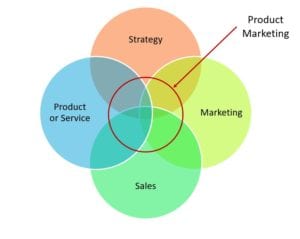
Here are two proven product marketing strategies that minimize time-to-first-dollar for service businesses (and that product businesses use all the time):
New services for your fastest prospects: do your fastest prospects need different services than the ones you have now? If you developed new ones specifically for them, would they buy even faster, pay more, be more loyal, etc.?
Unbundle your all-inclusive service to make it easier to become your customer: can you unbundle your service to create simpler, more focused services so there’s less of a barrier to doing business with you? These new entry point services should be less expensive and consequential and should ideally provide a natural upgrade path to the rest of your services.
For example, the first thing a wealth manager typically does with a new client is to create a financial plan. What if instead of insisting they sign on for all your wealth management services in order to get a financial plan, you spun out a new standalone, financial planning service?
There will be more prospects for this new entry point service and they will move much faster through your pipeline because: financial planning can be marketed using traditional lead generation techniques like advertising and is a lot less risky than investment management (the most you can lose with a bad financial plan is its fee, unlike bad investments which can ruin lives).
Importantly, financial planning creates many opportunities for a wealth manager to show off their skills, intelligence and trustworthiness and creates a natural upgrade path. If they’ve been suitably impressed with the development of their financial plan, they will turn to you to implement the plan.
Takeaways
- Focus on targeting & reaching your “fastest” prospects: those who most need you when they most need you.
- Develop new services for your “fastest” prospects
- Unbundle your all-inclusive service to create tiered services with upgrade paths. The entry-point service should be less risky and require less commitment & dollars
Sales Renewal Can Help
Sales Renewal is working with all of our clients on refining their business and marketing strategies for the Covid era. Whether it’s shortening the “time-to-first-dollar”, implementing minimal contact sales and marketing programs, creating alternatives to traditional face-to-face marketing, or revamping communications to earn trust, contact us to learn what we can do for you.

reCAPTCHA: Easy on Humans, Hard on Bots
Source: www.google.com
Sales Renewal has implemented Google’s newer, invisible reCAPTCHA on all our hosting clients’ sites, as well as our own. This new technology improves the user experience of filling forms and reduces the friction of capturing leads, as well as adding an additional layer of spam prevention. Regular tech upgrades such as this are part of how we make sure our clients are best situated to increase their revenue.

Beyond Coronavirus: The Path to the Next Normal
The COVID-19 is not only an immense health crisis–it’s also an imminent restructuring of the global economy, but leaders can begin navigating beyond the coronavirus crisis.
Source: www.mckinsey.com
In answer to the question “What will it take to navigate this crisis” the authors call on businesses and governments to act across five stages, leading from the crisis of today to the next normal that will emerge after the battle against coronavirus has been won:
- Resolve: All those in leadership positions must determine the scale, pace, and depth of action required at the state and business levels and resolve to do what it takes.
- Resilience: A McKinsey Global Institute analysis indicates that the shock to our livelihoods from the economic impact of virus-suppression efforts could be the biggest in nearly a century. In the face of these challenges, resilience is a vital necessity.
- Return: Returning businesses to operational health after a severe shutdown is extremely challenging and the weakest point in the chain will determine ultimate success. The authors suggest using Northern Hemisphere’s summer months to expand testing and surveillance capabilities, health-system capacity, and vaccine and treatment development to deal with a second surge.
- Reimagination: Institutions that reinvent themselves to make the most of better insight and foresight, as preferences evolve, will disproportionally succeed. The crisis will reveal not just vulnerabilities but opportunities to improve the performance of businesses.
- Reform: Leaders in government, business, healthcare, the financial system, educational institutions, and more should think about what reforms are needed to avoid, mitigate, and preempt a future health crisis of the kind we are experiencing today and to strengthen the system to withstand acute and global exogenous economic shocks, such as this pandemic’s impact.
Collectively, these five stages represent the imperative of our time: the battle against COVID-19 is one that leaders today must win if we are to find an economically and socially viable path to the next normal.

COVID-19 and the work-from-home shift are breaking work processes
Many manual work processes are becoming more difficult to execute for front line workers away from the office, according to a TrackVia report.
Source: www.techrepublic.com
For the foreseeable future, much of the world's workforce will be doing their jobs from home. Over the past several months, the shift from in-person intra-office communications to online-only interactions has revealed process gaps for many companies.
SalesRenewal has from inception been a distributed, virtual company with employees working across distance. With a decade of work-from-home experience, we have the knowledge to help guide your business and its marketing efforts on the path to effective virtualization.

The Case for Marketing Investment – Especially During Tough Times
We’ll admit: this is an uncomfortable subject to raise. Many of the people reading this will fall into one of two groups: (A) marketers who are struggling, in many cases because marketing budgets have been slashed, and (B) business operators who are up against the wall, many of whom see “severing a finger to save the hand” as the best available option.
Source: theclikk.com
For businesses that have experienced the need to cut nonessential spending due to the losses caused by the pandemic, marketing is usually one of the first areas to go. However, taking a deeper look sheds light on why investing in marketing is a good idea, if possible, during tough times.
The Harvard Business Review found that companies that cut marketing costs faster and deeper than their rivals later have the lowest probability (21%) of pulling ahead of the competition once times improve.
If your business slashed its marketing budget, take time to look at the sources and reasoning in this article to think about bringing it back. Keep in mind that anything that is put off now, will need to be rebuilt later. Being able to adapt your marketing to the post-COVID will benefit in the long run, since your new strategy will already be built out.

Webinar: Considerations for Adapting Your Business and Marketing Strategies for the New Normal
The New Normal for Business and Marketing Strategies
As businesses around the country try to assess what’s next after the big Shut Down, many are realizing that it won’t be “business as usual”, not just because of the reopening guidelines imposed by the government, but because customers and clients may not feel comfortable reentering the same old economy and now have a brand new set of expectations around service delivery.
Major brands are highlighting their contactless, distanced ways of doing business, even if they’re not so different than they were before. Pizza Hut promises that once your pizza comes out of the oven, the only person who touches it is you; we hope that this was true pre-Covid as well, but conveying that sense of comfort is important these days.
Leading-edge service delivery models, such as purchasing a new car online, may have been targeting early adopters pre-Covid, but are suddenly becoming mainstream. Drive-by document signing is now an accepted way of closing a deal. Even voting by mail is gaining traction since people are wary of physically entering crowded places.
This is a webinar for USA 500 Clubs, a community for successful Trusted Advisers in which we share and elaborate on this post’s insights.
How Will You Adapt?
There is no doubt that the key to winning back customers in the new normal is trust. Trust that you, as a business, understand your customers’ concerns and are doing everything in your power to keep them safe.
While some businesses may need to address fundamental operational and human resource processes, much of adapting your business to the new normal revolves around messaging, positioning, and communication (such as the Pizza Hut example.) In other words, around marketing.
First, show your customers you are doing the right thing. Keep your premises (including parking lots, entrances, and lobbies) spotless and common spaces delineated for distancing. Provide PPE for all employees and ensure they wear it to show your organization is not cutting any safety corners. Enforce all scientific and medical recommendations for safety and physical distancing — not just because it’s the right thing to do but also to signal to employees, prospects and customers that you take their safety seriously.
And then, tell them. Build trust by making sure clients and customers know and understand you’re doing what you can to keep them safe. Messaging, positioning and signaling in the new normal should focus on health, safety, and well being.
Professional Service Firms
Professional service firms have particular challenges in this pandemic environment because of their historic reliance on face-to-face marketing tactics (e.g., networking, events, seminars) which desperately need to be updated for a minimal contact world.
Even more challenging is their tendency to have a single, all encompassing service that is critically important to their prospects, presented as a take-it-or-leave-it offer, which results in very long sales cycles (e.g., signing up for a wealth management service is a very consequential decision so prospects are very careful and take their time).
To shorten the time-to-first-dollar, we recommend “unbundling” services to create tiered offerings that build on each other and provide a natural upgrade path. More on this can be found in Crafting Products and Services to Reduce Time-to-First-Dollar.
Sales Renewal Can Help
Sales Renewal is working with all of our clients on refining their business and marketing strategies for the New Normal. Whether it’s shortening the “time-to-first-dollar”, implementing minimal contact sales and marketing programs, creating alternatives to traditional face-to-face marketing, or revamping communications to earn trust, contact us to learn what we can do for you.

Three Things To Expect In The ‘New Normal’, Post-Pandemic Market
The market has three things its debating among itself. When it comes to life post-pandemic, three are top of mind.
Source: www.forbes.com
Interesting take from an economist in 3 key changes. The last one is particularly scary for Sales Renewal clients:
- More Saving, Less Spending
- New Supply Chains
- Small Business Looks Scarier
- “Right now, trial lawyers and ambulance chasers are busy filing suits against businesses opening up before quarantines are lifted, citing a danger to public health. Others are suing nursing homes. This becomes a whole new insurance risk going forward — making sure someone doesn’t try to sue because they went into your store and came out with a 101 fever the next day.”

New Normal After Coronavirus: 3 Changes Businesses Will Need to Adapt
Commentary: Government intervention, a contact-free economy, and automation will all define the new normal.
Source: fortune.com
Now that many of the worst-affected states are beginning to reopen their economies, we are all realizing that the post-pandemic world will be very different than it was just a few short months ago. We can expect increased government intervention as a result of the huge stimulus and bailout payments, and greater emphasis on promoting “an economy that serves all Americans”. According to the authors, the seismic shift to a contact-free economy will be seen in three areas in particular: digital commerce, telemedicine, and automation. All businesses need to rethink their business models and the name of the game is resilience. Companies will have to build, or strengthen, backup and safety plans, step up succession plans, and expand work-at-home capabilities. The good news is that the authors also anticipate some positive outcomes as a result of these changes. Sales Renewal is talking to a number of our clients on how they can adapt their businesses for success in what is being called the new normal.

Coronavirus Shut Down the ‘Experience Economy.’ Can It Come Back?
Large-scale gatherings are on hold for the foreseeable future. That is taking a toll on the live events industry and society at large.
Source: www.nytimes.com
Large public events and trade shows will probably be on hold for a long while. “Curated” events may be a very viable replacement: regional, Minimal contact events with invitation-only participants in brand name venues and controlled environments.

How COVID-19 Could Impact Retail Design: Clean lines, Clean Spaces
History has already shown us quite how drastic an effect disease can have on spatial design. COVID-19 will undoubtedly impact how we create space.
Source: www.frameweb.com
The COVID-19 pandemic will likely be an inflection point in the design of public and retail spaces. Expect to see changes in materials used (plastic and steel are out – copper is in) and navigation paths (more IKEA single-path navigation, less Apple Store open concept). In addition, advanced HVAC filtration systems and spacial semiotics to denote entrance to a clean, controlled environment will be needed to instill consumer confidence and encourage customers to return to brick-and-mortar retailers.